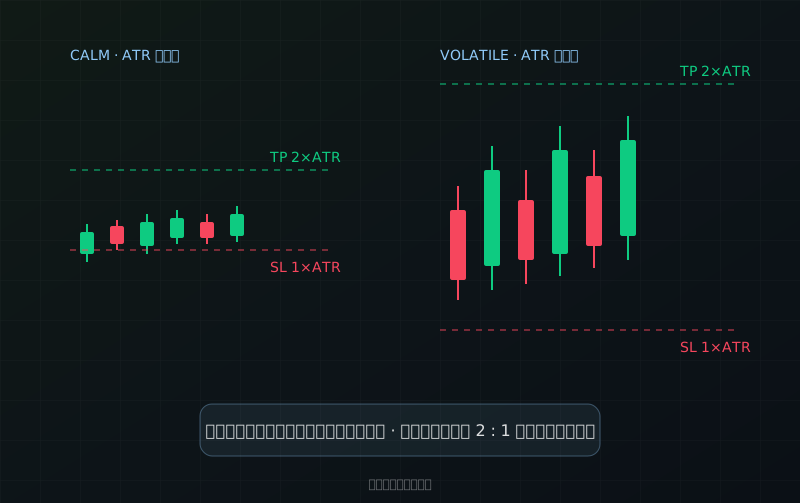
Win 1%, lose 0.5% — a 2-to-1 edge. Surely winning 1 in 3 is enough? You forgot one number.
Redo it with fees
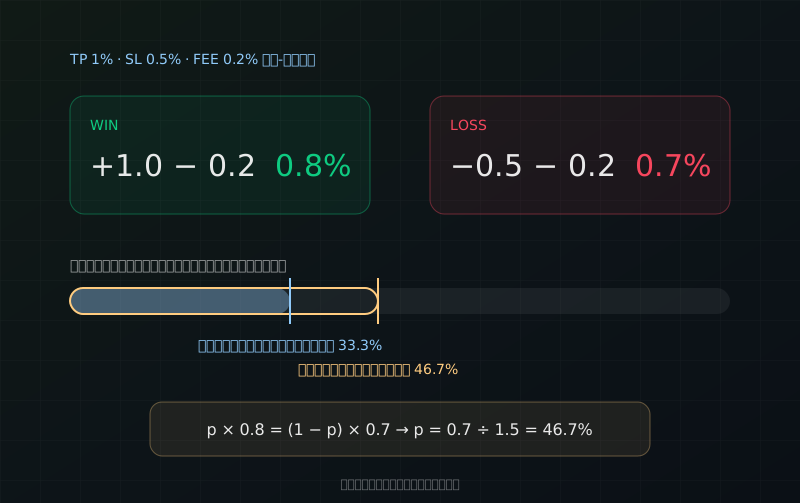
Assume 0.2% in round-trip fees per trade (about a typical exchange taker fee):
- A winning trade: 1% profit − 0.2% fees = 0.8% actually kept
- A losing trade: 0.5% loss + 0.2% fees = 0.7% actually lost
Break-even is where win rate × 0.8 = (1 − win rate) × 0.7. Solving gives win rate = 0.7 ÷ 1.5 = 46.7%.
From “1 in 3 is enough” to winning almost half of every trade just not to lose.
The more you trade, the more it shows
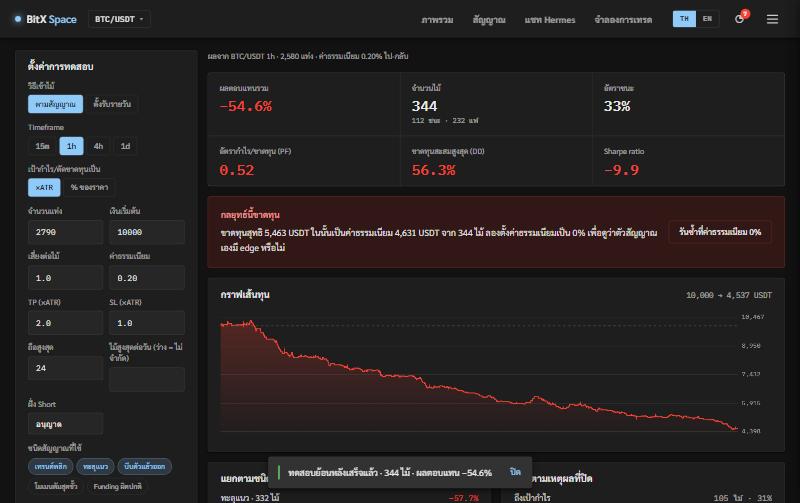
Fees are charged on every trade, good or bad, so strategies that trade often with small targets are hit hardest. In the system’s real backtest, fees made up over 80% of the total loss (read “A backtest that tells the truth, even when it hurts”).
What works
- Trade less, choose more — filter for quality signals
- Wider targets relative to fees — e.g. ATR-based distances instead of small %
- Always test with real fees — the system’s backtests and paper portfolios use 0.2% by default