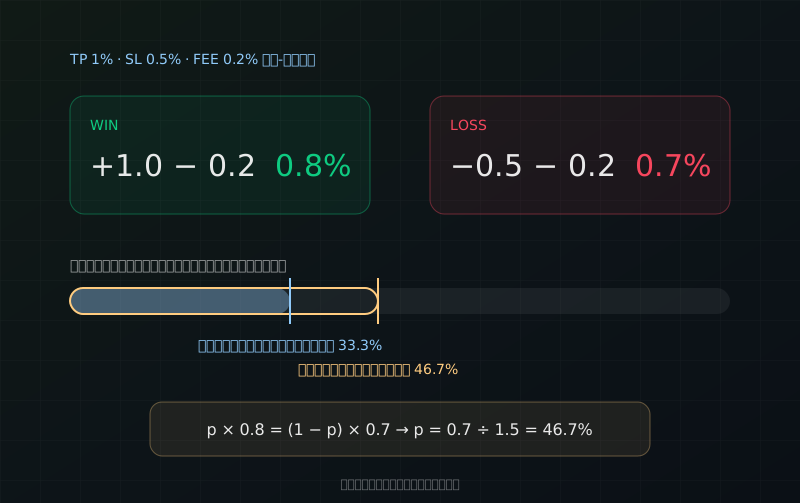
A 1% stop loss every time sounds disciplined. But on a day when price normally swings 2% an hour, that stop gets hit before the price goes anywhere — the problem isn’t discipline, it’s a distance that doesn’t fit the market.
What ATR is
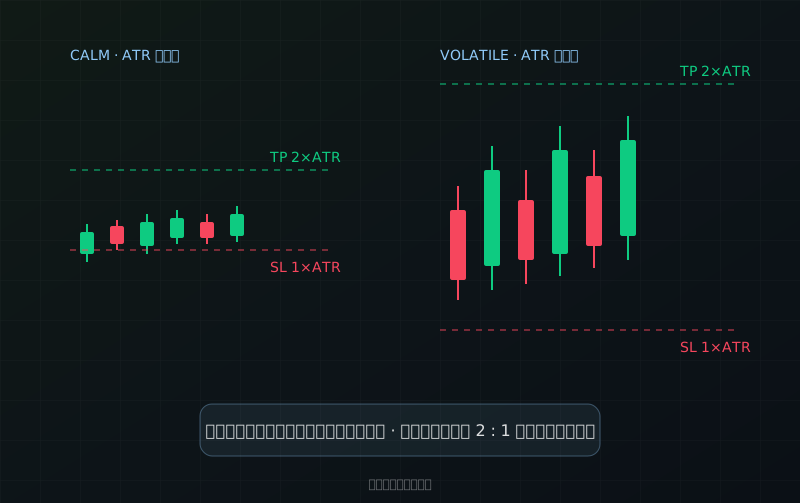
ATR (Average True Range) is the average amount the price moves per candle, in dollars. Higher ATR means a more volatile market; lower ATR a quieter one. It changes with the market all the time.
Using ATR to set distances
Instead of a fixed %, set distances as multiples of ATR, e.g. a 2 ATR target and a 1 ATR stop. When the market swings hard, the distance widens by itself; when it’s quiet, it narrows by itself.
- Distances that fit the market cut the chance of being stopped out by normal swings
- The reward-to-risk ratio stays the same, e.g. 2:1, whatever the market is doing
- Signal results can be compared fairly across periods
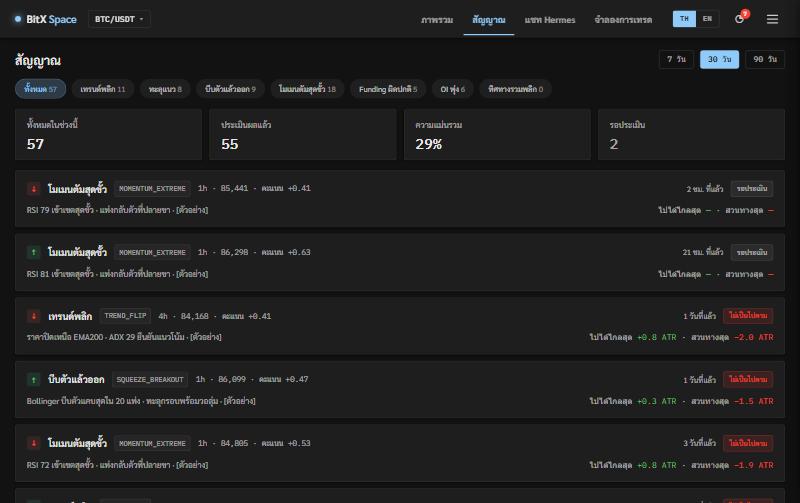
In BitX Space
The system measures every signal in ATR (“went at most +1.8 ATR”), and the backtest page lets you set targets and stops as multiples of ATR or as % of price — compare both on real data yourself.