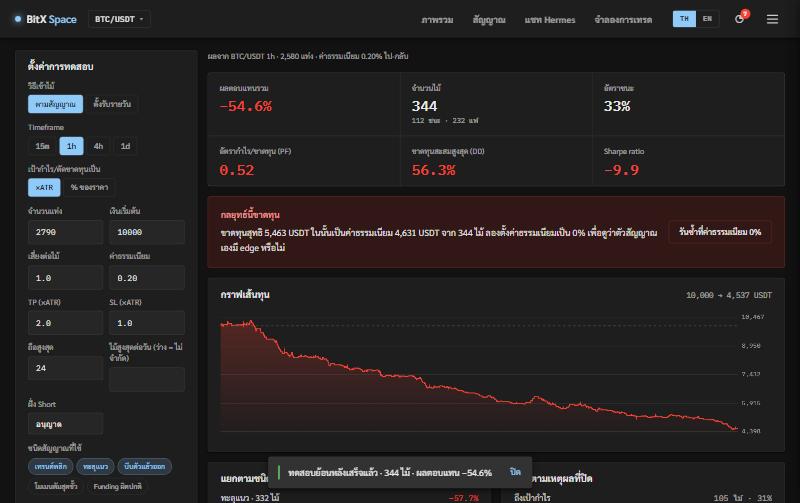
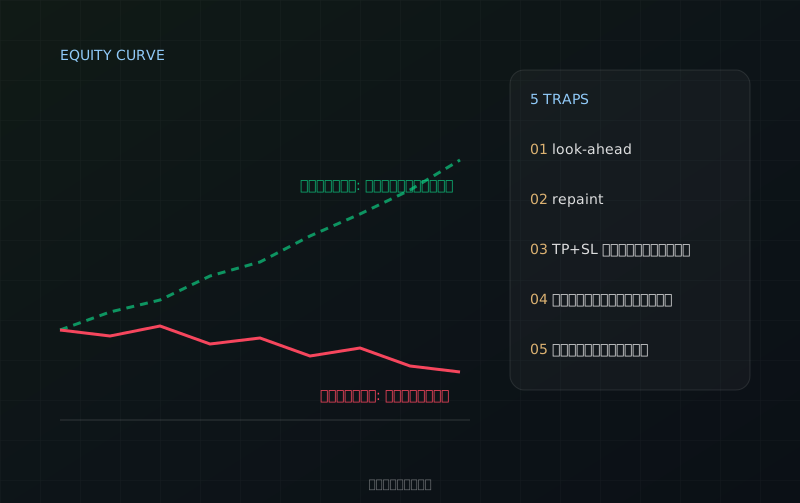
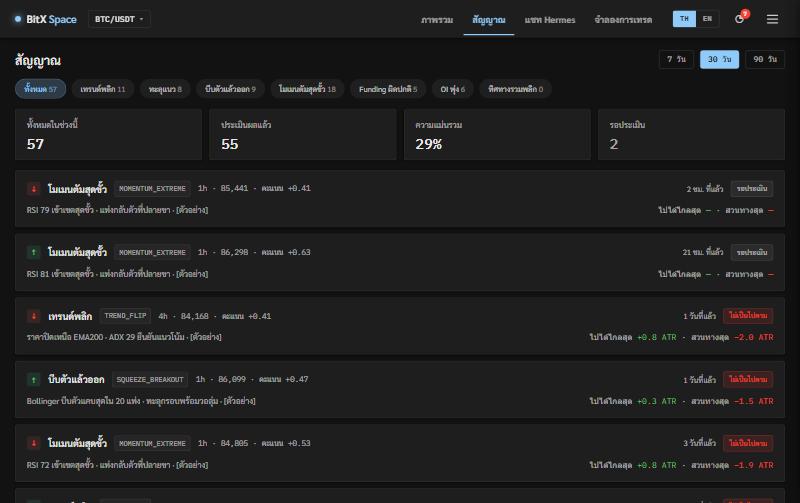
Many alerts don’t make a good system. The question that matters is what actually happened after each alert. BitX Space answers it for every signal, on the same page where you see the signals.
The 7 kinds of signal
- Trend flip — the trend changes direction, e.g. price closes across a long-term average with confirming strength
- Level break — price breaks an important support or resistance
- Squeeze breakout — volatility tightens to its narrowest, then breaks out one way
- Momentum extreme — unusually strong buying or selling, e.g. RSI in an extreme zone with a reversal candle
- Funding anomaly — funding rate unusually high or low, meaning one side is too crowded
- OI spike — Open Interest rising fast, new money entering positions
- Confluence flip — the combined score across all timeframes changes side
All of them are computed from closed candles only, so the system never “changes its mind” about a candle that is still running, and none of the numbers come from AI.
How the system measures them
After a signal, the system waits a set number of candles, then measures two values in ATR (the average range of a candle):
- Max favourable excursion (MFE) — how far the price went the way the signal said
- Max adverse excursion (MAE) — how deep the price went against it along the way
Measuring in ATR makes quiet and wild markets comparable. Signals that didn’t play out are clearly marked as such, never hidden.
The totals at the top
The top bar sums up how many signals fired in the chosen period, how many have been evaluated, the overall accuracy, and how many are still waiting. Filter by signal type to see which kinds work in the current market.