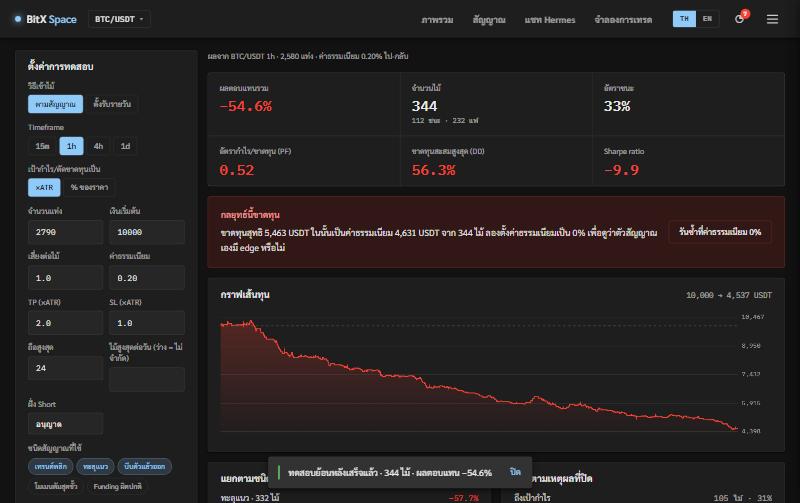
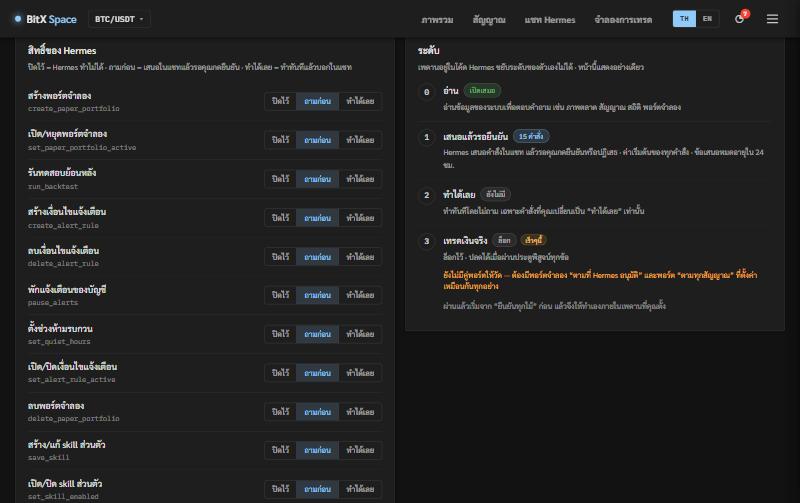
A backtest tells you how the past went, but tomorrow’s market is never yesterday’s. The safest way to know whether a strategy works is to let it run against the live market, with money that doesn’t exist.
How paper portfolios work
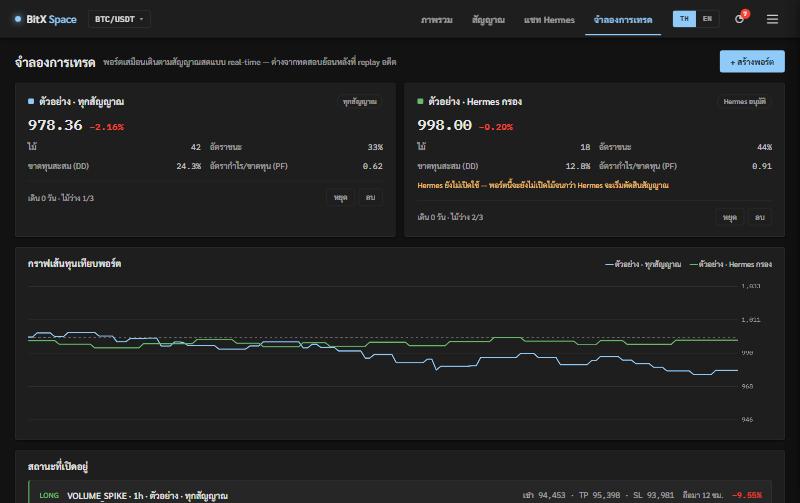
- They follow live signals in real time, unlike a backtest that replays the past
- Choose how to enter: every signal, only those Hermes approves, or a daily limit order
- Set capital, profit target, stop loss, fees, open positions at once and max trades per day
- Equity curves of several portfolios in one chart show at once which approach is better
Proving whether the AI actually helps
The system runs a pair of portfolios with identical settings, except one takes every signal and the other only those Hermes approves. If Hermes’ portfolio doesn’t win, the screening isn’t helping — the system calls this the “proof gate”, and it must be passed before real trading is even considered.
Alerts: let the system watch the screen
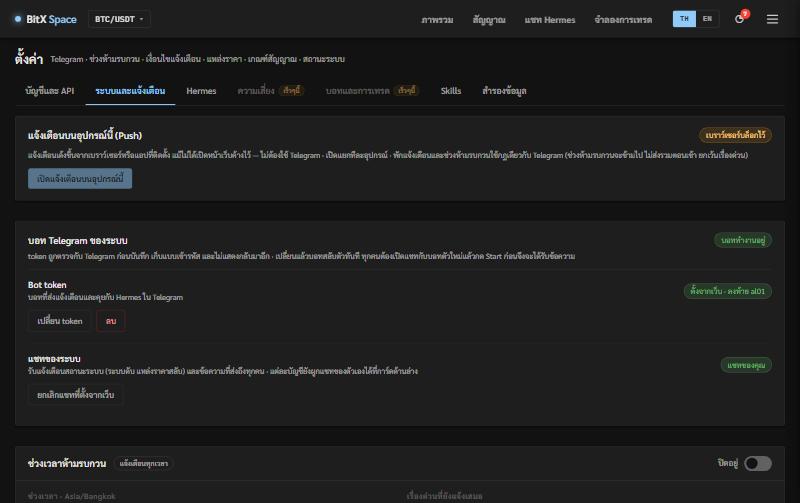
- On the web — the bell at the top right
- Push on phone or computer — turned on per device, works even when the page isn’t open (on iPhone, add the site to the home screen first)
- Telegram — link your account once, then get alerts and chat with Hermes there
- Quiet hours and pauses — set silent times; urgent kinds you choose still come through
- Your own rules — e.g. alert when price, funding rate or RSI crosses a level you set